
Identify the actual entrance
Provide the car park name, entrance street, level and bay or nearby fixed feature. A shopping centre, hotel or station may have several separate parking areas. Add the posted height clearance and explain gates, shutters, narrow turns or a separate exit. A map pin alone does not describe those access limits.
Describe the space around the vehicle
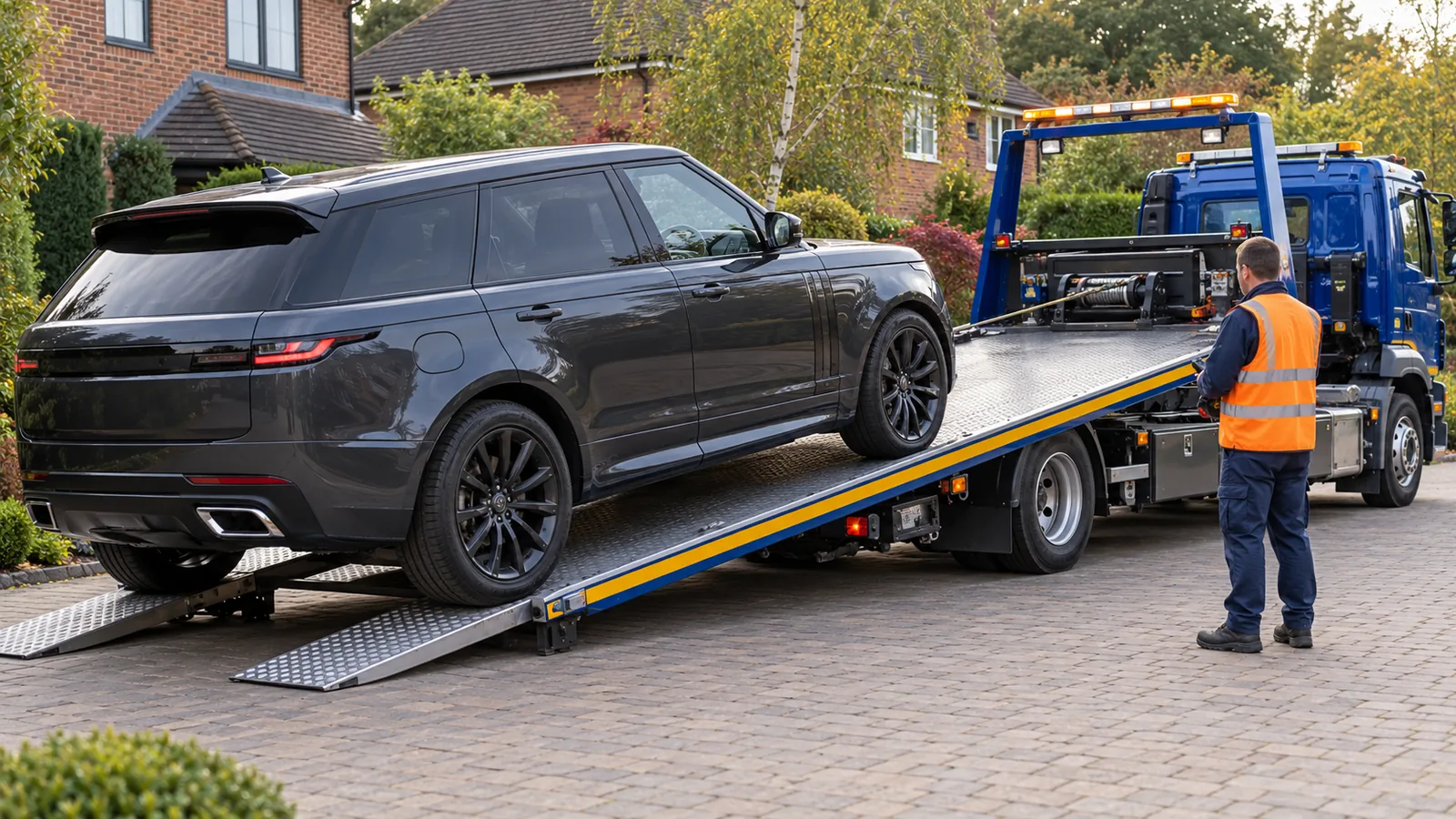
Tell us whether the car is nose-in against a wall, between pillars or blocked by neighbouring vehicles. State if it can drive, roll and steer, and disclose wheel damage. The team needs to assess whether the car can reach a suitable loading position without assuming a standard flatbed can enter the parking area.
Agree access and receiving arrangements
Ask the operator about barrier access and any requirements for a recovery vehicle. Keep the keys and parking information available. If the vehicle is going to a garage, confirm the delivery address, opening hours and acceptance. The collection plan should account for both leaving the car park and unloading at the destination.
Use current local information
Birmingham publishes council car park information and a city-centre access strategy. These help identify the surroundings, but current signs and the operator’s instructions take priority. Do not drive an unsafe car to a main road simply to make loading easier; explain its existing position and let the collection be assessed.
Your questions, answered.
Will a recovery truck fit under my car park barrier?
Not necessarily. Send the posted clearance and entrance details before booking. The suitable recovery method must be assessed for that particular site.
Can I leave before the vehicle is collected?
Only use an agreed key and access arrangement with a release contact. Do not assume the operator will hand over a vehicle without prior permission.